Physical vs Digital: What Each Channel Actually Does
Before getting into why physical experience matters, it helps to understand what we mean by it. Digital brand touchpoints, social media, paid ads, email, websites, are built around reach and targeting. They put a brand in front of the right person at the right moment, and they do it efficiently. Physical brand touchpoints, retail spaces, packaging, pop-ups, installations, events, work differently. They don't find people. They exist in spaces where people already are, and they create encounters that engage the body, not just the eye.
Experience design sits at the intersection of these two worlds: the practice of designing brand moments that are felt rather than just seen. It covers everything from how a product sits in someone's hand to how a retail space smells and sounds, to what it's like to walk through a brand installation. Where digital design is primarily visual, experience design is multisensory. And where digital encounters are abundant and easily scrolled past, a branding agency that invests in experience design creates moments that are rarer, slower, and significantly harder to forget.
The Precision Problem
Targeted digital marketing is built on a premise that feels logical: find the right person, with the right message, at the right moment. And it works. But precision has a side effect that's easy to overlook: it narrows a brand's world to the people it already knows about.
When every touchpoint is optimised for a defined audience, the brand quietly stops existing for everyone outside of it. There's no room for the person who wasn't in the persona, who doesn't follow the category, who had never thought to look but might have loved what they found. The algorithm is good at finding your audience. It's not designed to find the audience you didn't know you had.
Physical experience is different. A retail space, an installation, a product on a shelf: these are still designed with intention, with a target audience and a purpose in mind. But by existing in the physical world, they naturally extend beyond that. Someone walks past. Someone steps in out of curiosity. Someone picks something up because it caught their eye, not because an algorithm decided they were ready for it. Physical presence doesn't replace targeting, it creates space around it, where the people you didn't plan for can still find their way in.
What the Body Remembers
There's a reason physical brand encounters tend to stay with people longer than digital ones, and it has less to do with nostalgia than with how memory actually works.
Research by Nieuwenhuis points to something called the mere exposure effect: the more you see something, the more familiar it becomes, and the more familiar it becomes, the more you tend to like it. And the more you like it, the more you notice it. It's a loop that builds quietly over time, often without the person being aware it's happening at all. For brands, this means that presence, even passive presence, is doing something. You don't need to be remembered consciously to be building association.
Sensory experience accelerates this. Stimulating the senses increases engagement and makes things more memorable, often at a level that sits below conscious recall. Take Benetton on Oxford Street: a brand many people had known about for years without feeling much toward it. But walk past that store enough times, step inside once or twice, and something shifts. Not because of a campaign, but because of a distinct sensory atmosphere specific to that space: clean, considered, immediately recognisable. That experience became the brand. The association built slowly, then held. Years later, encountering something similar in a completely different context brings it back immediately, and the feeling that comes with it is positive, familiar, and entirely unprompted.
This is what physical experience does that digital can't fully replicate: it gets into the body, stores itself somewhere below conscious recall, and surfaces later in contexts the brand never planned for, which is precisely why a branding agency should never treat it as an afterthought.
The Unplanned Encounter Every Branding Agency Should Design For
Think about the brand moments that have actually stayed with you. A window display you stopped at. A product you picked up in a space you wandered into. An installation you photographed without knowing who made it. A space whose atmosphere you still associate with a particular feeling.
None of those encounters were the result of a targeted campaign finding you. They were serendipitous: the brand was present in a physical space, and you happened to be there too. That's not a small thing. It's the foundation of some of the strongest brand relationships, because the discovery felt like yours rather than something that was served to you.
A good branding agency designs for both: for the intended audience that the strategy has defined, and for the stranger who wasn't in any persona document but might become one of the most loyal customers the brand has. Leaving room for that encounter means thinking beyond the screen: about space, about texture, about scent, about what the brand feels like to stand next to, hold, or walk through.
Experience Design: How a Branding Agency Thinks Beyond the Screen
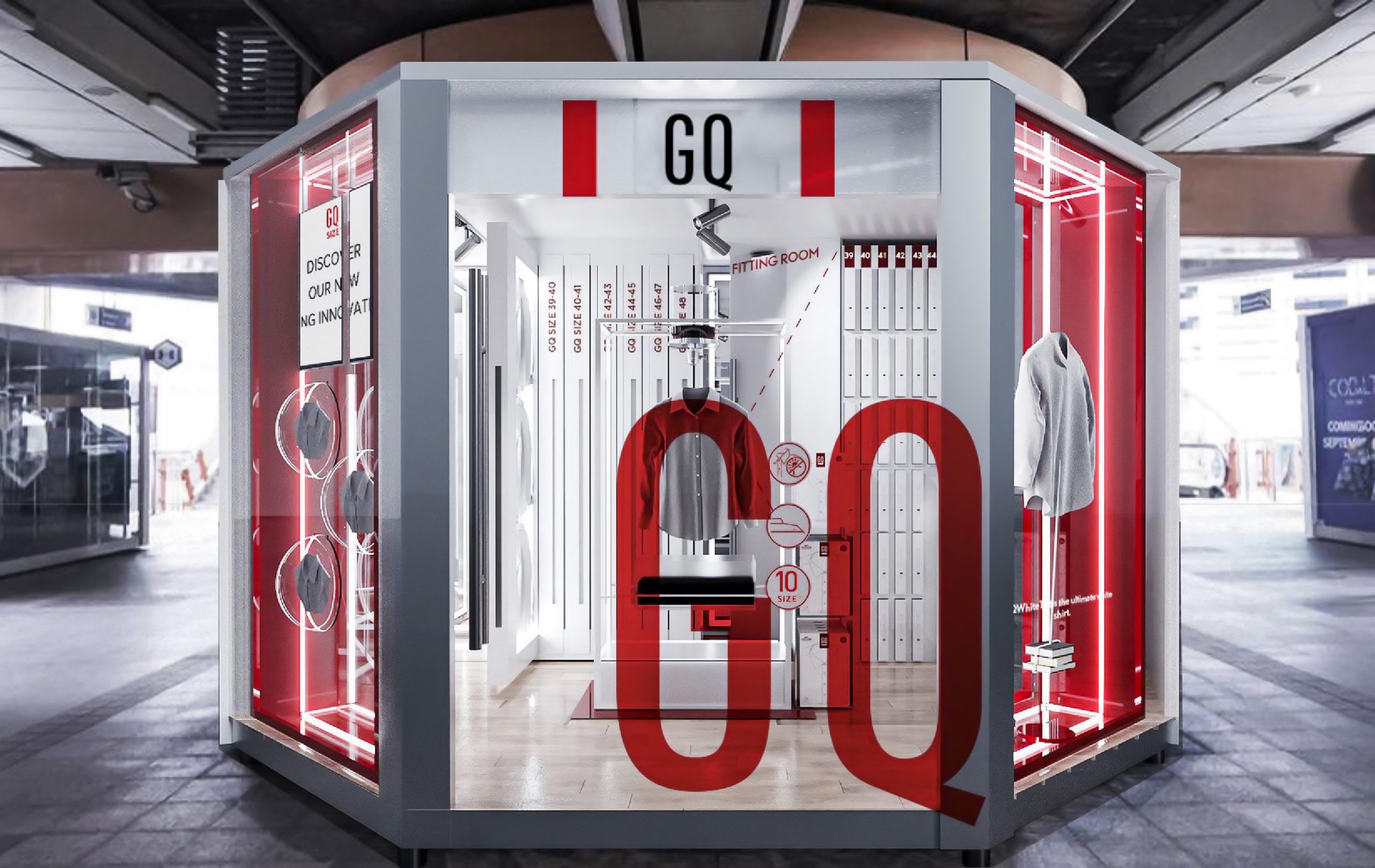
One of the clearest expressions of physical brand thinking is the rise of experience design: pop-ups, installations, and spatial activations that exist not primarily to sell, but to be felt. A well-designed brand installation does something a digital ad can't: it puts a person inside the brand world, gives them something to touch, hear, sense, or move through, and creates a memory tied to a physical moment rather than a scrollable one.
There's a layer of consumer psychology that makes this even more powerful when the experience is culturally relevant. Research shows that people process and retain information more deeply when it feels personally or culturally relevant to them — when it connects to something they already carry. An installation that speaks to local culture, seasonal meaning, or shared experience doesn't just attract attention; it creates a felt sense of recognition that generic brand activations rarely achieve.
Example: Aēsop
This is something we explored in our work with Aēsop: a story-driven installation inspired by the Year of the Snake, designed to stop passersby and draw them into the store through light, texture, and layered symbolism. The snake form, a surface with light emerging from within, referenced rebirth and renewal through a cultural lens that felt immediate and specific to the moment. For anyone who recognised the reference, the encounter carried a resonance that went well beyond the visual. For those encountering it without that context, it was still striking enough to make them stop. That's the range a well-considered physical experience can achieve.
Interactive and experiential brand moments also tend to travel further than static ones. People share what they experience, not just what they see. An installation that someone photographs and posts extends the brand's reach organically, into networks the original campaign never touched, carried by the genuine reaction of someone who was simply there.

Physical Is Not the Opposite of Digital
This isn't an argument for abandoning digital. It's an argument for not letting it become the only language a brand speaks.
The brands that tend to build the most durable relationships are the ones that exist in multiple registers: a strong digital presence that reaches the right people, and a physical presence that reaches whoever happens to be there. The two reinforce each other. Someone who encounters a brand physically and is moved by it will look it up. Someone who follows a brand online and then encounters it in the real world will feel their existing impression confirmed or deepened in a way no post could achieve.
What gets lost when brands go fully digital isn't just reach. It's the quality of the encounter. Screen-based brand experiences are abundant and easily scrolled past. Physical ones are rarer, slower, and when done well, significantly harder to forget.
Conclusion
The stranger who became a customer didn't start as a target. They started as someone who was in the right place at the right time, in front of something that made them stop. Building for that possibility, leaving the door open for it, is one of the more undervalued things a branding agency can do.
At Appart_, we think about brand across every context it operates in: digital, physical, spatial, sensory. Because the people who matter most to a brand aren't always the ones who were looking for it. Get in touch if you'd like to talk through what that looks like in practice. We work with brands across Bangkok, Hong Kong, and Singapore.
FAQs: Physical Branding and Brand Experience
Q: Why does physical brand experience still matter in a digital world?
Because physical encounters engage the senses in ways digital can’t replicate, and sensory memory is among the strongest drivers of brand association. A scent, a texture, or a space can store itself in memory and resurface long after the encounter, without any further media spend or targeting required.
Q: What is sensory branding and how does it work?
Sensory branding is the practice of designing brand experiences that engage more than just the visual: scent, sound, texture, taste, and spatial atmosphere. Research shows that stimulating the senses increases engagement and makes brand encounters more memorable, often at an implicit level the consumer isn’t consciously aware of.
Q: How do branding agencies design for physical brand experiences?
A good branding agency thinks beyond the logo and the screen: about how a brand feels in a retail space, what it smells like, how its packaging sits in someone’s hand, and what an installation communicates to someone who has never heard of the brand before. Physical experience is a design problem, and it requires the same strategic rigour as any other brand touchpoint.
Q: Can a brand reach new audiences through physical experience?
Yes, and it’s one of the clearest advantages physical has over digital. Targeted digital campaigns are built around defined audiences; physical touchpoints are open to anyone who happens to be present. Some of the strongest brand relationships begin with an unplanned encounter, a stranger who walked into a space, picked up a product, or stopped in front of an installation without ever having been targeted.
Q: How can Appart_ help with physical brand experience?
At Appart_, we work across brand strategy, identity, and experience design for brands across Bangkok, Hong Kong, and Singapore. Whether you’re thinking about retail, packaging, spatial design, or a broader brand world that works across digital and physical, get in touch to start the conversation.